
Without reliable electricity, universal health coverage cannot be reached.
At least one billion people globally are served by health facilities that lack reliable access to electricity. In sub-Saharan Africa, WHO estimates that 15% of medical facilities have no power connection, and only 40% of those that are connected receive a reliable supply.
Why powering health matters.
Access to electricity is critical for health care services: lighting, vaccine storage, water provision, communication, laboratory operations, sterilization of medical equipment, and critical appliances such as ventilators and oxygen concentrators. A midwife needs light to guide childbirth, while nurses and clinicians need it to correctly diagnose and respond to emergency conditions.
In Kenya, 26% of medical facilities lack a power connection and only 15% of grid-connected ones receive uninterrupted electricity, with a sharp urban–rural divide that leaves rural facilities far worse off. The Powering Health project enhances healthcare service delivery in nine rural health facilities by providing sustainable electricity solutions.
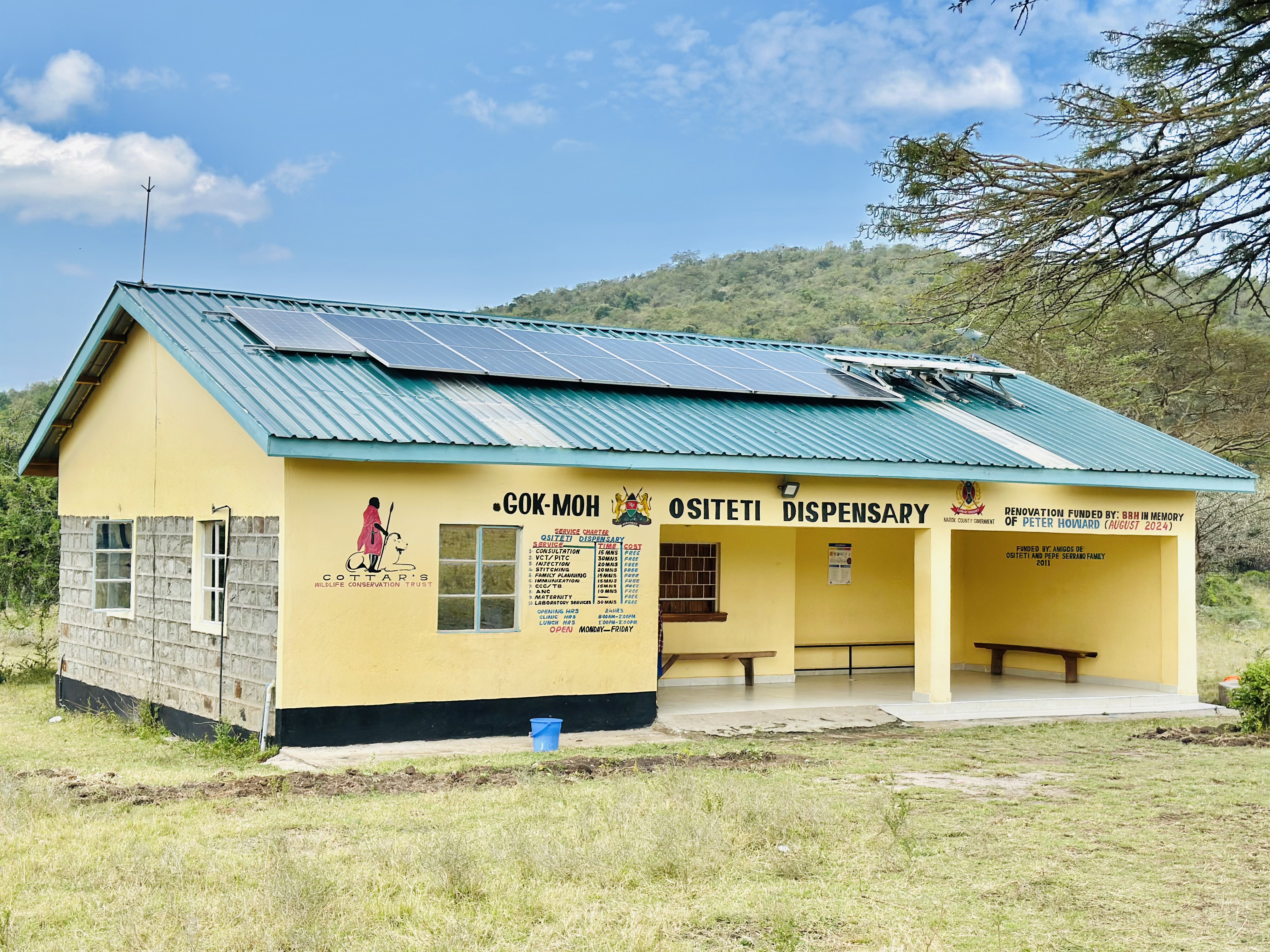
Our implementation approach.
The Powering Health project is implemented using a structured, stepwise approach, customized to each facility's energy needs and built for long-term sustainability.
Needs Assessment & Energy Audit
A comprehensive needs analysis is conducted at each targeted rural health facility, including an inventory of all critical medical and non-medical equipment and their energy requirements. The audit gives a clear estimate of the average daily load, the total power needed under normal working conditions, which forms the foundation for the system design.
System Design & Load Sizing
A customized solar energy system is designed for each facility, factoring in both current consumption and future expansion. A typical configuration includes a 5kW hybrid inverter, 545W solar modules, and three 5kW lithium batteries, powering critical services such as vaccine refrigeration, maternity and outpatient lighting, and communication tools.
Procurement & Installation
Solar systems are procured through a competitive bidding process, ensuring transparency and the selection of the most appropriate technology. Installation is completed by pre-qualified local engineering firms responsible for transportation, setup, and system commissioning.
Sustainability & Capacity Building
Health facility in-charges and system operators receive hands-on training in operation, troubleshooting, and routine maintenance. Maintenance schedules and manuals are issued, and in-charges are supported to advocate for budget allocation and build partnerships with local service providers, laying a strong foundation for long-term reliability.
Where we've powered health.
The Powering Health project has so far reached nine rural health facilities across Narok West and Transmara West Sub-Counties.